
Watch the August Maritime VBlog
Cybersecurity has become a critical part of maritime operations. As regulations evolve and cyber threats become more sophisticated, vessel owners and operators are under increasing pressure to strengthen their cyber posture while maintaining safe and efficient operations.
However, one important reality is often overlooked:
Vessels are not ports, so their cybersecurity requires a different approach.
Unlike shore-based facilities, vessels operate in unique environments where limited connectivity, rotating crews, and operational technology (OT) systems create challenges that traditional IT security programs were never designed to solve.
Effective cybersecurity compliance for vessel operators starts by understanding these operational realities and building practical processes that support both security and maritime safety.
Why Vessel Cybersecurity Is Different
Cybersecurity frameworks provide valuable guidance but applying them aboard a vessel requires a different mindset than securing a corporate office or port facility.
Vessel environments introduce challenges such as:
| Constant crew rotations with varying levels of cybersecurity awareness | |
| Limited or intermittent satellite connectivity | |
| Operational technology (OT) systems that directly support navigation, propulsion, and vessel operations | |
| Reduced access to technical support while at sea |
These operational constraints mean cybersecurity controls must be practical, resilient, and designed to function even when resources are limited.
Cybersecurity at sea is not simply an IT issue. It is an operational requirement.
Where Most Vessel Operators Struggle
Many organizations understand the importance of cybersecurity but encounter similar obstacles when implementing a compliance program aboard their vessels.
Limited Asset Visibility
You cannot protect systems you do not know exist.
Many operators struggle to maintain an accurate inventory of onboard IT and OT assets, making it difficult to assess risk, prioritize vulnerabilities, or demonstrate compliance.
Without visibility, cybersecurity becomes reactive instead of proactive.
Incident Response at Sea
Responding to a cyber incident is significantly more challenging when a vessel is hundreds of miles offshore.
Limited connectivity, smaller onboard teams, and restricted access to technical specialists can delay response efforts if clear procedures are not already in place.
Preparation before an incident is often more important than the response itself.
Shore-to-Ship Coordination
Cybersecurity is a shared responsibility between vessel crews and shore-based personnel.
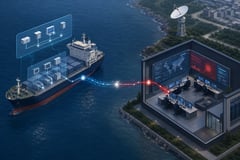 Without clearly defined communication channels, escalation procedures, and support responsibilities, incidents can become difficult to manage and may impact operational continuity.
Strong coordination helps ensure that technical decisions support safe vessel operations.
What Works in Practice
Many organizations understand the importance of cybersecurity but encounter similar obstacles when implementing a compliance program aboard their vessels.
Improving cybersecurity compliance does not require implementing every available security technology.
The most successful vessel operators focus on building strong fundamentals that can be consistently maintained across the fleet.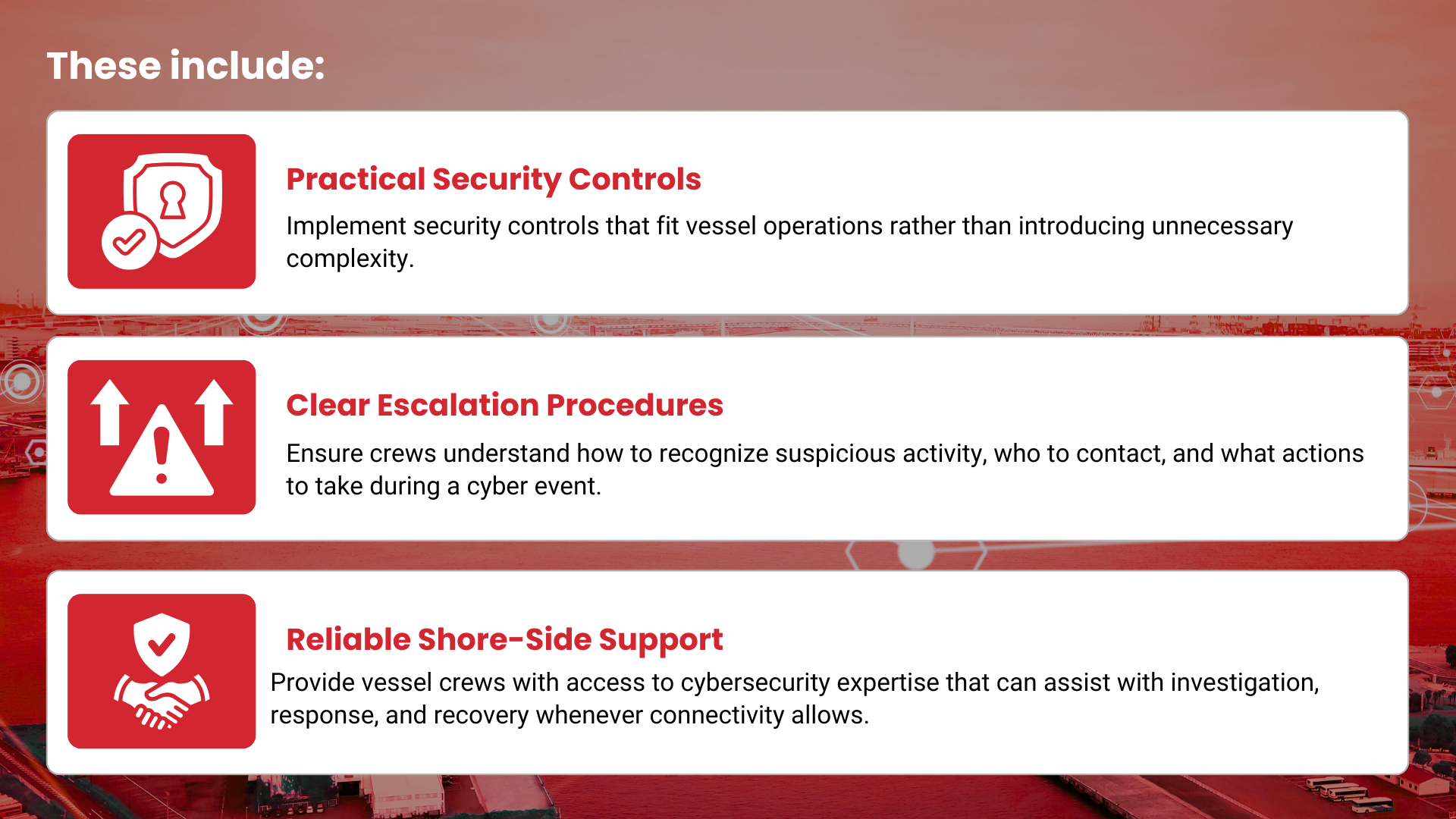
Simple, repeatable processes often provide greater operational value than overly complex cybersecurity programs.
Cyber Safety Is Maritime Safety
Cybersecurity compliance is not about checking boxes or satisfying regulatory requirements.
For vessel operators, cybersecurity protects navigation systems, operational technology, crew safety, cargo, and business continuity. Every cyber decision has the potential to affect operational outcomes.
Organizations that view cybersecurity as part of everyday vessel operations are better positioned to reduce risk, improve resilience, and adapt to evolving compliance requirements.
Key Takeaways
| Vessel cybersecurity is operational, not theoretical. | |
| Crew awareness is one of the strongest defenses against cyber threats. | |
| Effective shore-side support is essential for incident response and operational resilience. | |
| Strong cybersecurity programs begin with practical fundamentals before adding complexity. |
Start With the Fundamentals
Cybersecurity compliance does not happen overnight. It is built through practical processes, informed crews, and strong coordination between ship and shore.
Watch our webinar, Cybersecurity Compliance for Vessel Operators: From Bridge to Shore, to learn how maritime organizations can strengthen cyber resilience while supporting safe and efficient vessel operations.
Because when it comes to maritime cybersecurity, cyber safety is maritime safety.

Frequently Asked Questions (FAQs)


